The Ancient Wisdom of Joseph
Nigeria's next Dangote will grow food. Growing it will not be enough. That company will process it, store it, brand it and sell it to nations that cannot feed themselves.
The idea is older than oil. It sits in the story of a Hebrew prisoner who became the most consequential economic mind Egypt ever had.
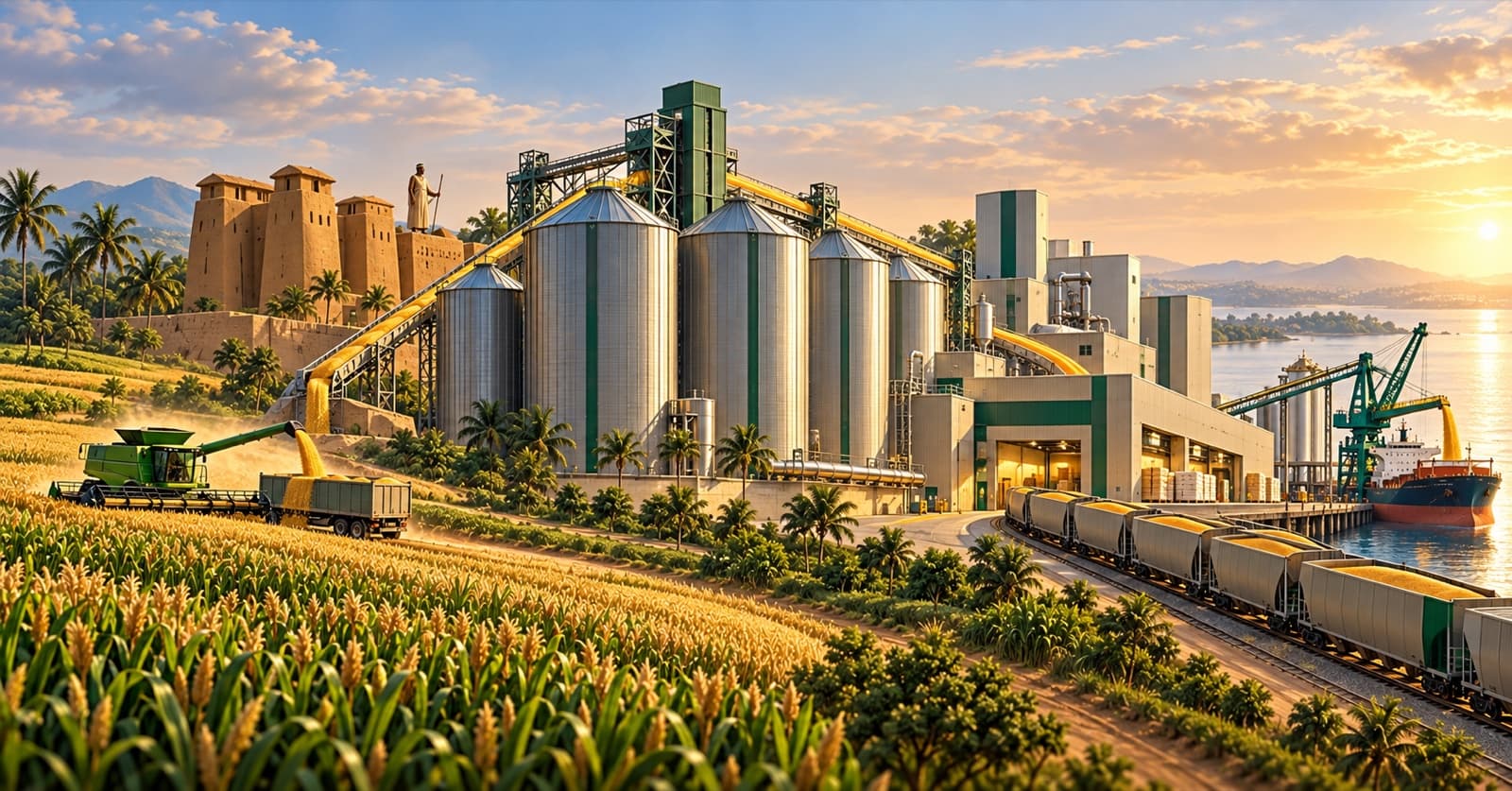
The dream and the plan
Pharaoh dreamt of seven fat cows eaten by seven thin ones, and nobody in his court could read it. Joseph could. Seven years of plenty were coming, followed by seven years of famine so severe that abundance would be forgotten.
Joseph did not stop at interpretation. He gave the king a plan. Set aside a fifth of the harvest in the good years, store it in the cities close to the fields, and put a discerning manager in charge with real authority. Do the hard work while everyone else is celebrating. When the famine came, Egypt had grain and the world did not.
Whoever holds the reserves holds the power
Moreover, all the earth came to Egypt to Joseph to buy grain. Genesis 41:57
Egypt conquered no one. It simply held what everyone needed at the moment they needed it most. Joseph gathered all the money in Egypt and Canaan. When the money ran out, people paid with livestock, then with land. The nation holding the essential good absorbed the wealth of every nation that lacked it.
That is the law of trade. Reserves decide who sets the terms in hard times, and power grows with how badly others need what you hold. The buyer brings money. The seller names the price.
I would go a step further. The foreign reserves Nigeria holds today are a real cushion, and they matter. But like most countries' reserves, they are held largely in dollars, which is another nation's currency. That is useful for stability, yet it is not a source of power. The reserve that gives leverage is the one we produce ourselves, the grain, fuel and finished goods the world has to come to us to buy.
The inverted granary
By Joseph's logic, Africa should be Egypt. We grow roughly 75 to 80 percent of the world's cocoa, yet by one recent estimate we keep about 6 percent of the value of a chocolate market worth over $165 billion. We hold the grain. Someone else holds the granary.
Colonial rule built that template. Africa was organised to export raw cash crops and import finished goods, and tastes shifted with it. Dignity was taught to look like a suit and tie, progress to taste like bread and imported rice, and local fabrics and foods were recast as backward. The cotton, cocoa and crude were African. The factory, the brand and the margin sat abroad, and we bought back the finished version of our own wealth at a premium.
We must be honest about the rest. Nigeria's wheat and rice imports climbed sharply after independence, with the oil boom of the 1970s and the cities it built. Colonialism planted the dependency, and we kept choosing it. That is the hopeful part, because what we chose we can unchoose.
We have done it before. Long before colonial rule, Kano's dyed cloth was traded across the Sahel, and Aba and Kaduna later ran large textile mills. We were once the supplier. Building the granary again is a return, not a dream.
None of this is a quarrel with other nations over what happened in the past. It is about Africa becoming productively valuable to the world, and moving from the dependence it finds itself in today to genuine collaboration. Partners trade on equal footing, and the world gains when Africa has more to offer.
The new race for the granary
Every serious nation now understands Joseph. China built its power by becoming the factory of the world. The United States is working to bring manufacturing home and racing for dominance in artificial intelligence, because whoever leads there becomes the nation everyone else depends on. These are granaries for a new century.
For decades Nigeria lived like Jacob's family in the famine, sending silver abroad for essentials and negotiating from hunger. That is starting to change. In 2023, Nigeria imported nearly 400,000 barrels of refined fuel a day. By the second quarter of 2026, with the Dangote refinery's 700,000 barrel a day capacity online, imports had fallen below 130,000, and Nigeria was exporting about 350,000 barrels a day of refined products to Europe, Africa and Asia. Our music, film and fashion now travel the world as well. The buyer is becoming the seller, one sector at a time.
Agriculture is our grain
Oil and culture are wins. Agriculture could be the advantage that outlasts them both. We have the land, the climate, the labour and a home market of over two hundred million people. Agriculture will not carry a country alone. It is the base that processing, logistics, finance and manufacturing build on, and it gives work to a large share of Nigerians. What we lack is Joseph's discipline, and the sequence matters.
Add value at home. Process, store and package before anything leaves the farm gate.
Feed ourselves first. Consume nationally until our own tables are full and food prices stop punishing families.
Export the surplus in the formats other nations buy. Flour, not grain. Chocolate, not beans. Packaged food, not produce in sacks.
That is how we feed the nations. Not as a supplier of raw material for someone else's factory, but as the granary they come to.
The plumbing of a granary
Joseph's plan needed more than grain. It needed storehouses, managers, records and a way to sell to foreigners who arrived with silver. Grain without plumbing is just a harvest waiting to rot. For Nigeria, that plumbing has three layers.
Physical. Warehouses and silos near the farms, cold chains for what spoils fast, and roads, rail and ports that move food out before it loses value. A large share of what Nigerian farmers grow never reaches a buyer, which makes this a storage problem before it is a farming problem.
Transformation. Plants that turn cassava into starch and flour, tomatoes into paste and cocoa into chocolate, built to the packaging, testing and certification standards that let shipments clear foreign ports instead of being turned back. This is where the margin lives.
Trade rail. Cross-border payments that let a buyer in Accra, Rotterdam or Dubai pay a Nigerian exporter quickly, trade finance so producers get paid before the ship lands, and identity verification so buyers and sellers who have never met can trust each other. Export platforms that bring documentation, compliance, logistics and buyer discovery into one place.
None of these layers works alone. A warehouse without a buyer is a cost. A buyer without a payment rail is a lost deal. A plant without power and roads is a monument. The farm is only one part of the granary, and whoever builds the rest decides whether Nigeria feeds the nations or keeps exporting raw.
Two warnings
Joseph's system saved lives, but it placed nearly all of Egypt's land in the throne. Generations later, a new king arose who did not know Joseph, and the same machinery enslaved Joseph's own people. Wisdom has to live in institutions and limits, not in the goodness of whoever holds power.
The second warning is Egypt itself. The land of Joseph's granaries now competes with Indonesia to be the world's largest wheat importer. Advantage won through foresight is lost through complacency.
Whether you farm, build, finance or regulate, there is a layer here that is yours. Farmers can add value before the farm gate. Founders can build the payment, tracking and verification rails. Investors can fund storage and processing. Policymakers can keep the rules steady long enough for all of it to pay back.
So the work is clear. Save in good seasons. Process what we grow. Refine what we pump. Retrain our appetite, so what we make carries the dignity of what we were taught to want. Build the plumbing that lets the world buy from us.
The nation that prepares becomes the market maker. The nation that does not becomes the price taker.
Africa was never meant to be the buyer waiting at someone else's gate. We hold the grain, and it is time we built the granary.
Read next
Why Africa Cannot Skip Physical Infrastructure
The "leapfrog" narrative is seductive but incomplete. Africa leapfrogged landlines for mobile. It leapfrogged bank branches for mobile money. But you cannot leapfrog electricity. You cannot leapfrog roads. Some things must simply be built.
6 min read→Greatness Through Service
The businesses that became impossible to displace were never the ones with the cleverest product. They were the ones everyone else needed in order to function. Real power, at the level of a nation or a single founder, is systemic utility.
6 min read→Follow along
Get new essays in your feed reader, such as Feedly or NetNewsWire. Add adetuyi.com/feed.xml and new writing will arrive as it is published.
Work with me
If something in this piece resonated, that is usually where the conversation starts.
Written by
Tolu Adetuyi